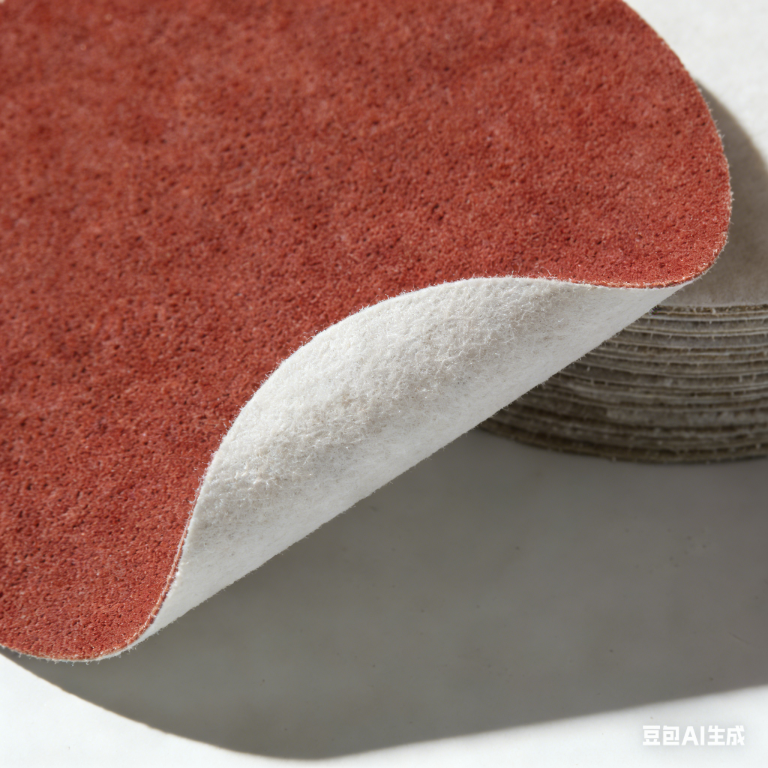
In the dynamic landscape of the global hardware polishing industry, Velcro cloth has emerged as a critical auxiliary material, and Chinese manufacturers have established themselves as key players in its production. Renowned for their precision engineering, cost-effectiveness, and commitment to innovation, these manufacturers have tailored Velcro cloth solutions specifically to meet the rigorous demands of hardware polishing processes. This article delves into the core aspects of Chinese-made Velcro cloth for the hardware polishing sector, including its matching strategies with sandpaper, technological advancements, and future development trends.
In the dynamic landscape of the global hardware polishing industry, Velcro cloth has emerged as a critical auxiliary material, and Chinese manufacturers have established themselves as key players in its production. Renowned for their precision engineering, cost-effectiveness, and commitment to innovation, these manufacturers have tailored Velcro cloth solutions specifically to meet the rigorous demands of hardware polishing processes. This article delves into the core aspects of Chinese-made Velcro cloth for the hardware polishing sector, including its matching strategies with sandpaper, technological advancements, and future development trends.
1. Selecting Suitable Velcro Cloth Based on Different Sandpaper Widths
One of the fundamental principles in optimizing hardware polishing efficiency lies in the precise matching of Velcro cloth width with sandpaper width. Chinese manufacturers recognize that improper width matching can lead to a series of operational issues, such as uneven polishing pressure, increased material waste, and reduced sandpaper lifespan. To address this, they have developed a comprehensive product range with diverse width specifications, ensuring compatibility with the full spectrum of sandpaper widths commonly used in the hardware industry.
For small-width sandpapers (typically 50mm to 100mm) used in intricate polishing tasks, such as polishing small metal components or narrow grooves, manufacturers produce Velcro cloth with corresponding narrow widths. This ensures that the sandpaper is fully supported across its entire surface, preventing edge curling and ensuring consistent polishing results. Medium-width sandpapers (100mm to 200mm), widely used in general-purpose hardware polishing, are paired with Velcro cloth of matching widths to balance operational flexibility and polishing stability. For large-width sandpapers (exceeding 200mm) employed in high-volume polishing of large metal panels or structural components, Chinese manufacturers offer extra-wide Velcro cloth with reinforced edges. This reinforcement prevents tearing under high tension and ensures uniform pressure distribution, critical for achieving consistent surface finishes on large workpieces.
Moreover, many Chinese manufacturers provide customized width services to cater to the unique requirements of specific polishing equipment or specialized hardware products. By collaborating closely with customers to understand their production processes, they can produce Velcro cloth with non-standard widths, further enhancing the adaptability of their products in diverse polishing scenarios.
2. Choosing Appropriate Velcro Cloth Gram Weight Based on Sandpaper Grit Size
The gram weight of Velcro cloth (a measure of its surface density) is another crucial factor that directly impacts the performance of hardware polishing, particularly when matched with different sandpaper grit sizes. Chinese manufacturers have conducted extensive research to establish the optimal gram weight ranges for various grit sizes, ensuring that the Velcro cloth provides adequate support, adhesion, and durability throughout the polishing process.
For coarse-grit sandpapers (typically below 120 grit), which are used for heavy material removal and initial shaping of hardware components, a higher gram weight Velcro cloth (usually 200g/m² to 300g/m²) is recommended. Coarse-grit sandpapers exert greater pressure during polishing, and the higher gram weight cloth offers enhanced structural stability, preventing deformation under heavy load. This stability ensures that the sandpaper maintains its shape, avoiding uneven material removal and surface scratches. Additionally, the denser surface of high-gram weight Velcro cloth provides stronger adhesion to coarse sandpaper, reducing the risk of sandpaper slippage during high-intensity polishing.
Medium-grit sandpapers (120 grit to 600 grit), used for intermediate polishing to smooth surface imperfections, are paired with medium gram weight Velcro cloth (150g/m² to 200g/m²). This balance of density and flexibility allows the sandpaper to conform to the contours of hardware components while maintaining sufficient support for consistent polishing. For fine-grit sandpapers (above 600 grit) employed in final finishing and mirror polishing, a lower gram weight Velcro cloth (100g/m² to 150g/m²) is preferred. Fine polishing requires gentle pressure and high precision, and the lighter, more flexible Velcro cloth enables the sandpaper to adapt to subtle surface variations, ensuring a smooth, uniform finish without introducing new scratches. The softer surface of low-gram weight cloth also minimizes friction between the Velcro and sandpaper, extending the lifespan of fine-grit sandpapers which are often more expensive.
3. Development and Innovation of Velcro Cloth
Chinese manufacturers have consistently invested in research and development to drive the evolution of Velcro cloth for the hardware polishing industry, focusing on material innovation, performance enhancement, and sustainability.
In terms of material innovation, traditional Velcro cloth was primarily made of polyester. However, manufacturers now blend polyester with other high-performance fibers, such as nylon and aramid, to improve key properties. Nylon-blended Velcro cloth offers superior wear resistance, making it suitable for long-term, high-frequency polishing applications. Aramid-reinforced Velcro cloth, on the other hand, exhibits excellent heat resistance, addressing the issue of heat buildup during prolonged polishing, which can degrade traditional Velcro materials and affect polishing quality. Additionally, some manufacturers have introduced polyurethane-coated Velcro cloth, which provides enhanced water and chemical resistance, expanding its application in wet polishing processes commonly used in the hardware industry to reduce dust and improve surface finish.
Performance enhancement has also been a key focus. Chinese manufacturers have developed Velcro cloth with optimized hook density and distribution. By increasing the number of hooks per unit area and ensuring uniform distribution, they have significantly improved the adhesion strength between Velcro cloth and sandpaper, reducing the frequency of sandpaper replacement and improving production efficiency. Furthermore, advancements in weaving technology have resulted in Velcro cloth with better dimensional stability, minimizing stretching or shrinkage during use, which is critical for maintaining consistent polishing precision. Some products also feature a non-slip backing layer, which enhances the grip between the Velcro cloth and polishing equipment, preventing slippage and ensuring safe operation.
Sustainability has become an increasingly important aspect of Velcro cloth development. In response to global environmental concerns and stricter regulatory requirements, Chinese manufacturers are adopting eco-friendly materials and production processes. They are using recycled polyester fibers in the production of Velcro cloth, reducing reliance on virgin materials and lowering carbon footprint. Additionally, water-based adhesives and environmentally friendly dyes are being used to replace solvent-based alternatives, minimizing harmful emissions. Some manufacturers have also developed recyclable Velcro cloth products, enabling post-use recycling and contributing to a circular economy in the hardware industry.
4. Conclusion
Chinese manufacturers have made significant strides in the production of Velcro cloth tailored for the hardware polishing industry, demonstrating expertise in precise product matching, continuous innovation, and a commitment to quality and sustainability. By offering a wide range of width specifications to match different sandpaper widths and optimizing gram weight based on sandpaper grit sizes, they have enabled hardware manufacturers to achieve higher polishing efficiency, better surface quality, and reduced material waste.
The ongoing development and innovation in materials, performance, and sustainability have further solidified the position of Chinese-made Velcro cloth in the global market. As the hardware polishing industry continues to evolve, with increasing demands for precision, efficiency, and environmental responsibility, Chinese manufacturers are well-positioned to meet these challenges. Through continued investment in research and development, close collaboration with customers, and adherence to high-quality standards, they will continue to drive the advancement of Velcro cloth technology, providing valuable solutions to the global hardware polishing sector and contributing to the overall development of the manufacturing industry.
One of the fundamental principles in optimizing hardware polishing efficiency lies in the precise matching of Velcro cloth width with sandpaper width. Chinese manufacturers recognize that improper width matching can lead to a series of operational issues, such as uneven polishing pressure, increased material waste, and reduced sandpaper lifespan. To address this, they have developed a comprehensive product range with diverse width specifications, ensuring compatibility with the full spectrum of sandpaper widths commonly used in the hardware industry.
For small-width sandpapers (typically 50mm to 100mm) used in intricate polishing tasks, such as polishing small metal components or narrow grooves, manufacturers produce Velcro cloth with corresponding narrow widths. This ensures that the sandpaper is fully supported across its entire surface, preventing edge curling and ensuring consistent polishing results. Medium-width sandpapers (100mm to 200mm), widely used in general-purpose hardware polishing, are paired with Velcro cloth of matching widths to balance operational flexibility and polishing stability. For large-width sandpapers (exceeding 200mm) employed in high-volume polishing of large metal panels or structural components, Chinese manufacturers offer extra-wide Velcro cloth with reinforced edges. This reinforcement prevents tearing under high tension and ensures uniform pressure distribution, critical for achieving consistent surface finishes on large workpieces.
Moreover, many Chinese manufacturers provide customized width services to cater to the unique requirements of specific polishing equipment or specialized hardware products. By collaborating closely with customers to understand their production processes, they can produce Velcro cloth with non-standard widths, further enhancing the adaptability of their products in diverse polishing scenarios.