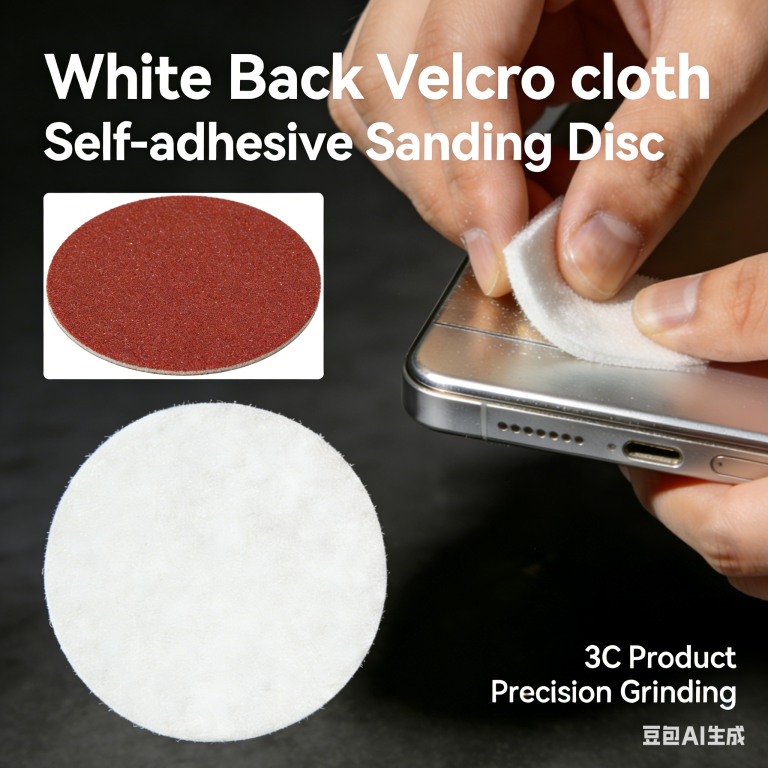
In surface finishing and material processing, Velcro hook-and-loop cloth works closely with abrasive sandpapers to boost efficiency, precision, and consistency. It firmly fixes sandpapers to tools and sanding blocks. Its grammage directly affects durability, performance, and compatibility. This article introduces five common grammages: 70–75g, 80–85g, 90–95g, 100–105g, 110–120g, with matching sandpapers, uses, and advantages.
1. 70-75g Velcro Cloth: Ideal for Lightweight Fine Sanding
70–75g Velcro cloth is light and flexible. It is thin and soft, so it fits curved and uneven surfaces well. It lets sandpaper touch the workpiece evenly. We recommend fine grits from 240 to 600. They are perfect for fine finishing and polishing. They remove small scratches and marks. It is widely used for furniture, car paint, and plastic parts. It also eases hand fatigue during long manual sanding.
2. 80-85g Velcro Cloth: Versatile for Medium-Fine Sanding
80–85g Velcro cloth balances flexibility and strength. It is thicker than 70–75g, so it supports sandpaper better. Yet it still fits most surface shapes well. It works best with 120–320 grit sandpaper. This grit is great for intermediate sanding, smoothing surfaces, and removing light scratches. It is widely used in woodworking and auto repair. You can use it with power sanders or by hand. It is stable, practical, and fits many daily tasks.
3. 90-95g Velcro Cloth: Reliable for Medium Sanding
90–95g Velcro cloth is stronger and more rigid. It is ideal for medium sanding work. It removes material faster than fine sanding, but still keeps surfaces smooth. Its backing is thicker, so it supports sandpaper very well. This prevents the sandpaper from tearing or wearing out fast, even during long use.
90–95g Velcro cloth works best with 80–180 medium grit sandpaper. This grit offers strong cutting force, so you can use it for basic surface preparation. You can strip old paint and varnish from wood, smooth rough timber, and prepare metal before coating.
For example, you pair it with 120 grit sandpaper on wooden cabinets. You remove saw marks efficiently and flatten surfaces. In metalworking, you clean welds and smooth joints steadily.
This cloth is durable. It resists high-speed power sanders well, so industrial users widely choose it.
4. 100-105g Velcro Cloth: Durable for Heavy-Medium Sanding
100–105g Velcro cloth is made for heavy-medium sanding. It removes material quickly and stays stable. Its thick, strong backing resists high pressure and friction, so it works with aggressive sandpapers.
It matches 40–120 grit sandpaper. You can shape wood and metal, strip thick paint and rust, and sand rough concrete or stone. It shapes furniture and car bodies efficiently. It’s also ideal for industrial sanding machines, thanks to its high durability.
5. 110-120g Velcro Cloth: Heavy-Duty for Rough Sanding
110–120g Velcro cloth is the thickest and most durable type. It is specially made for heavy rough sanding and aggressive material removal. Moreover, its stiff backing fully supports sandpaper, so it stays stable and intact even on hard surfaces.
It works best with 24–80 coarse grit sandpaper. With it, you can smooth rough wood, level concrete, and remove thick rust. Besides, it fits high-power tools like angle grinders. Overall, it is strong and wear-resistant, ideal for heavy industrial work.
Conclusion
Choosing the right Velcro cloth grammage is key to great surface finishing. Each weight—70–75g, 80–85g, 90–95g, 100–105g, 110–120g—has its own features for different sanding jobs and grits.
If you match them correctly, you work faster, waste less material, and keep steady quality. This helps workers in woodworking and auto repair get the smooth surface they need, with high quality and strong performance.