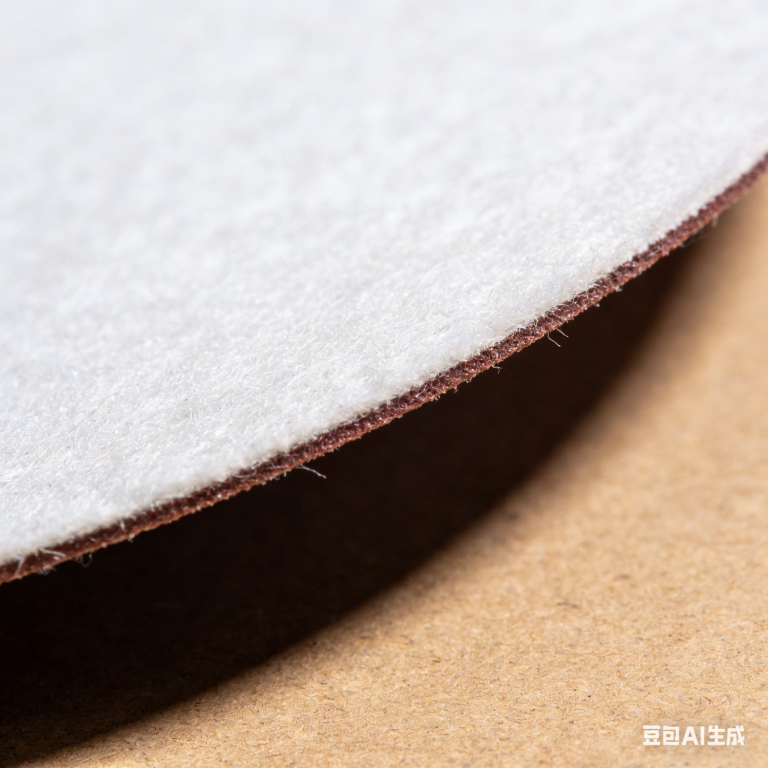
In the global abrasive industry, China’s manufacturers play a pivotal role in innovating Velcro cloth, the essential backing material that connects sandpapers to sanding tools. As (polishing and sanding) technologies evolve and end-users demand higher efficiency, durability, and precision, Chinese producers have established a systematic R&D process to develop new Velcro cloth tailored to the abrasive sector’s unique needs. This process integrates market insights, material science, technological innovation, and rigorous testing, ensuring that each new Velcro cloth product meets the stringent requirements of industries such as metalworking, woodworking, automotive refinishing, and aerospace. Below is a detailed breakdown of how Chinese manufacturers approach the development of new Velcro cloth for the abrasive industry.
1. Market Demand Analysis: Identifying Pain Points for Velcro Cloth
Developing new Velcro cloth starts with deep market research. First, we work closely with sandpaper makers, tool factories, auto repair shops and furniture factories to collect user feedback. Users find many problems: the cloth sticks poorly to sandpaper, wears fast at high speed, fits curved parts badly and works unstably in heat or humidity. For example, auto repair workers often see sandpaper slip on curved panels. Also, high pressure in metalworking tears common Velcro cloth easily. So we set clear goals. We strengthen adhesion, improve tear resistance and heat stability, and make the new product fit real working needs.
2. Material Innovation: Enhancing Velcro Cloth Performance
Material selection is key when we develop new Velcro cloth for abrasive use. We mainly use polyester and nylon, and we also improve or mix them with other fibers for better performance. For example, we add aramid fibers to polyester to boost wear resistance and stop fraying during heavy sanding. We also use low-melt polyester to bond tightly with sandpaper without extra glue. Besides, we apply anti-static coatings to reduce dust in electronics work. We also design thicker hooks and denser loops to strengthen grip under vibration. All these changes help us make more reliable and efficient Velcro cloth.
3. Technological Upgrades: Optimizing Velcro Cloth Production Processes
Chinese manufacturers invest heavily in advanced production technologies to refine the quality and consistency of new Velcro cloth. One key advancement is the adoption of precision weaving machines that control the density and uniformity of the loop structure in Velcro cloth. Uniform loops ensure even pressure distribution between the Velcro cloth and sandpaper, reducing the risk of uneven sanding. Additionally, computerized cutting systems enable the production of Velcro cloth in custom shapes and sizes, catering to specialized sanding tools like orbital sanders, belt sanders, and detail sanders.
Heat treatment processes are also optimized to enhance the stability of Velcro cloth. For example, post-weaving heat setting at controlled temperatures (around 180-200°C for polyester Velcro cloth) reduces shrinkage and improves dimensional stability, ensuring the Velcro cloth maintains its shape during prolonged use. Some manufacturers also use plasma treatment to modify the surface of Velcro cloth, increasing its adhesion to sandpaper backings and improving resistance to moisture and chemicals commonly encountered in abrasive environments.
4. Rigorous Testing: Ensuring Velcro Cloth Reliability
Before launching new Velcro cloth, we first carry out strict tests to check its performance. To begin with, we test adhesion strength. We stick the cloth to sandpaper and use a force gauge to pull it until it detaches. After that, we move to wear resistance tests. We run the cloth on a machine thousands of cycles to see how fast it wears down. Besides, we also test heat and humidity resistance. We expose it to high heat and wet air at the same time. In the end, we fully confirm it stays stable in tough working conditions.
Field trials are also a crucial part of testing. Manufacturers partner with pilot users to test the new Velcro cloth in real sanding operations, gathering feedback on its performance, ease of use, and durability. For example, a new heat-resistant Velcro cloth might be tested in an automotive paint shop, where it is used with high-speed orbital sanders on car bodies under direct sunlight. Based on the test results and user feedback, manufacturers make final adjustments to the Velcro cloth, such as adjusting the fiber blend or modifying the hook design, to ensure it meets or exceeds industry standards.
5. Sustainable Development: Eco-Friendly Velcro Cloth Solutions
In recent years, Chinese manufacturers have also focused on developing eco-friendly Velcro cloth for the abrasive industry, aligning with global sustainability trends. This includes using recycled polyester fibers to produce Velcro cloth, reducing reliance on virgin materials. Some producers also develop biodegradable Velcro cloth variants using plant-based polymers, though these are still in the early stages of commercialization for abrasive applications. Additionally, water-based adhesives and coatings are used in Velcro cloth production to minimize the release of volatile organic compounds (VOCs), making the manufacturing process more environmentally friendly.
Conclusion
The development of new Velcro cloth for the abrasive industry by Chinese manufacturers is a holistic process driven by market demand, material innovation, technological advancement, and rigorous testing. By closely collaborating with users, investing in R&D, and embracing sustainable practices, these manufacturers continue to push the boundaries of Velcro cloth performance, offering products that enhance the efficiency, precision, and cost-effectiveness of sanding operations worldwide. As the abrasive industry evolves, Chinese producers are well-positioned to remain at the forefront of Velcro cloth innovation, meeting the growing demands for high-quality, specialized backing materials that power modern polishing and sanding technologies.