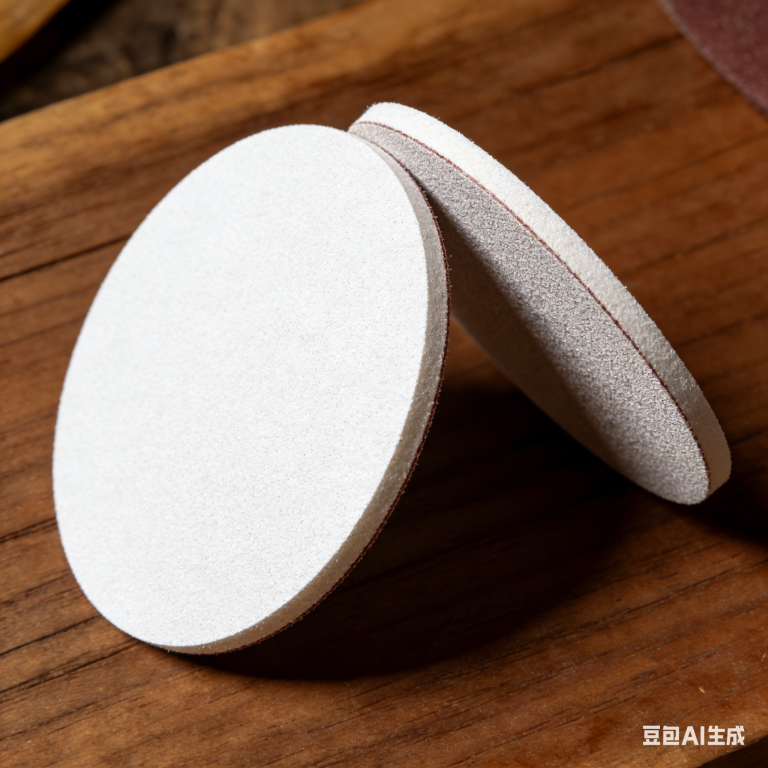
Velcro backing fabric for sanding Discs and Pads is the core backing material for grinding products. Its material, density, pile length and firmness directly determine the adhesion, durability, flexibility and application scenarios of downstream products. In practice, it is most commonly used to make three types of products: backed abrasive sheets, polishing discs and backed sponge abrasives. These three products have distinct functional positioning, application scenarios and performance requirements, so their requirements for flannel adaptation also differ. Below we will detail the adaptation logic between each product and abrasive Velcro cloth based on their core characteristics.
Sanding discs
Backed abrasive discs are common industrial grinding tools. They are stiff, wear-resistant and fast-cutting. Made with paper or cloth base and back flannel, they resist bending and suit rough, medium flat sanding. They stick firmly, last long, and support dry and wet grinding for metal, wood and automotive industry. Velcro cloth needs good adhesion and stability, with proper pile height, strong material and firm coating for steady grinding use.
polishing pads
Unlike backed abrasive sheets that focus on rough grinding, polishing pads are mainly used for fine polishing, mirror finishing and scratch repair. First, they are soft, highly elastic and stick well to workpieces. Second, their base material is mostly pure Velcro or a mix of sponge and Velcro. This material can hold polishing liquid well. It also eases grinding pressure. Besides, it keeps workpieces from getting scratched. Finally, it makes workpieces shiny evenly. Also, polishing pads are widely used in precision grinding. They are used for metal mirrors, paint fine polishing, jade, acrylic and electronic casings. So, polishing pads have higher demands on Velcro cloth. They need cloth to be smooth, soft and clean. Specifically, long or extra-long pile Velcro cloth (pile length 0.8–2.5mm) is best. Long pile can hold more polishing paste. It also improves buffering and reduces scratches on workpieces. For material, high-quality nylon or polyester is better. This kind of Velcro cloth is smooth. It won’t scratch workpieces and can make them shinier after polishing. In addition, the Velcro must be highly elastic and low in density. This ensures it fits curved workpieces well and applies even grinding pressure. Also, it must resist chemical corrosion, not shed lint and stay clean. This helps it work in precision polishing and dust-free scenes.
backed sponge abrasives
Backed sponge abrasives deliver flexible grinding. Firstly, they are elastic and cushioned. Made of sponge and Velcro, they fit curved surfaces well. Besides, they support dry and wet fine grinding, resist clogging and edge chipping. Thus, they apply to auto putty, plastics, 3C and furniture parts.
Furthermore, they need elastic, bendable waterproof Velcro cloth. Choose 0.3–1.0mm medium-short pile. It bonds firmly and keeps elasticity. It resists tearing and works well with waterproof coating. Nylon cloth is top choice, while polyester is cost-effective.
Conclusion
In short, the key to choosing Velcro backing fabric is to match the function and use scene of downstream products. First, backed abrasive discs focus on fast cutting and flat surface grinding. They need short, dense, wear-resistant Velcro made of nylon or polyester that sticks well. Second, polishing discs focus on fine polishing and mirror finishing. They need long, soft and thick Velcro. Third, backed sponge abrasives focus on curved surface grinding and flexible use. They need medium-short, elastic, waterproof Velcro made of nylon or polyester. Choosing the right abrasive Velcro cloth can make grinding products last longer and work better. It also fits different grinding needs and helps finish grinding work efficiently and accurately.